- Firac
- Posts
- 🤝 Wage-fixing could land you in jail
🤝 Wage-fixing could land you in jail
Also, Facebook news leaving Canada, and what AI can do for lawyers

Andy
June 26, 2023

Hi friends,
If you partake in the casual wage-fixing agreement, jail time might be in your future. Amendments to the Competition Act came into effect this weekend, and the penalties for misconduct are significant.
In today’s email:
Recent developments: wage-fixing, refugee claims, and Facebook.
Innovation: Panellists at tech summit share what AI can and can’t do for lawyers.
International: A year later: Roe v Wade overturned.
RECENT DEVELOPMENTS
“Wage-fixing” and “no-poaching” agreements are now criminal offences: Amendments to the Competition Act, effective June 23, 2023, make it a criminal offence for employers to agree to fix any terms of employment or to not solicit or hire each other’s employees. The penalties for misconduct are significant, and can include imprisonment for up to 14 years and/or unrestricted fines at the court’s discretion.
Major ruling on “safe third country” agreement and refugee status: Subject to some exceptions, the SCC held that the regulations designating the US a safe third country do not infringe refugee claimants’ rights to liberty and security of the person under s 7 of the Charter by preventing refugee status claims when entering Canada from a “safe third country”.
Facebook and Instagram to stop providing news to Canadians once the Online News Act comes into effect. The Act will require internet giants, like Meta, to pay for news content that appears on their sites if monetized in some way. Meta states that news has no economic value for the company, whose users use the platform for other purposes.
INNOVATIONS
AI for legal research problematic, but document generation/review promising: McCarthy Tétrault LLP revealed at a recent Tech Summit that AI works better for some legal applications than others. Panelists highlighted that while AI was capable of producing, analyzing and reviewing documents with promising accuracy, when asked to conduct legal research, AI produced a number of “hallucinations”, or confident responses not supported by its training data.
INTERNATIONAL
A year later: Roe v Wade overturned
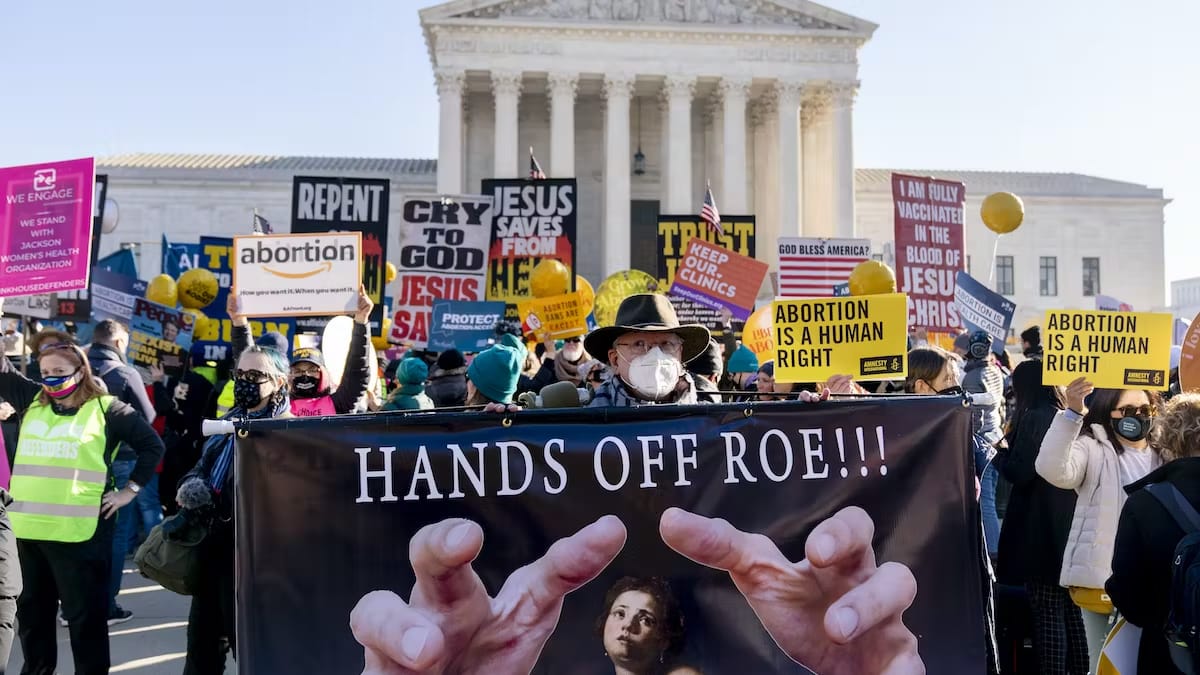
A year ago yesterday, the US Supreme Court overturned Roe v Wade, finding that the US Constitution does not confer a right to abortion.
In the past year:
25 states have banned or restricted access to abortion, 14 of which banning most, if not all, abortions.
On the other hand, 26 states are protecting abortion in some way: some states have passed laws, while others have protections written into state constitutions or common law. States with protections have seen a spike in patients, with some clinics experiencing more than 50% increases, and others only able to help a small fraction of those seeking help.